
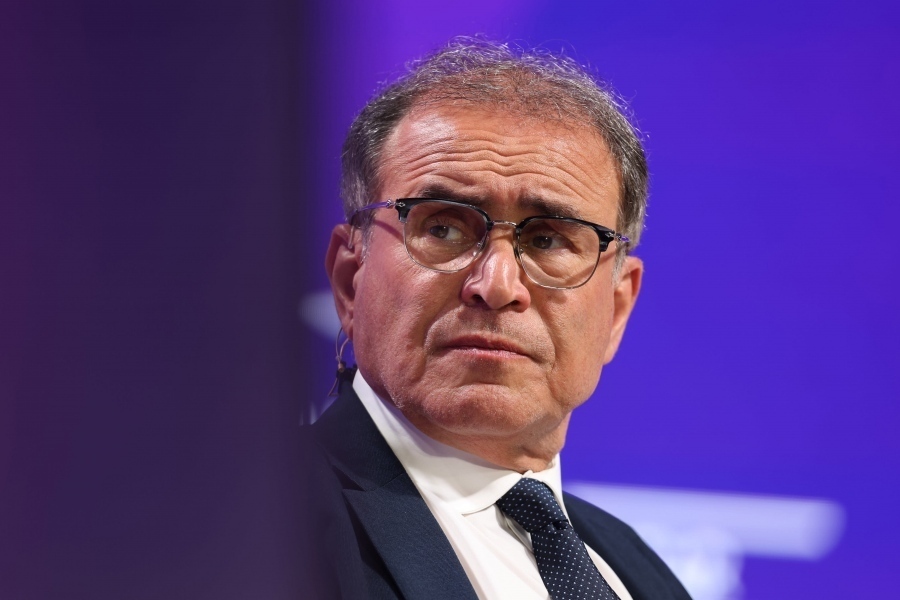
Prominent economist Nouriel Roubini places the global economy on high alert, warning of a new, catastrophic systemic crisis.
The explosive combination of swelling public debt and unchecked oil prices threatens to trigger a horror domino effect across markets.
Investors are called upon to prepare for the worst-case scenario, as tremors across the global chessboard bring the nightmare of a generalized collapse back to the forefront.
Despite rising perils, uncertainties, and major negative supply shocks over the last two years, equity markets and the global economy as a whole have held up quite well.
Following the shock induced by tariffs from US President Donald Trump, which were announced on «Liberation Day» (April 2) of 2025, came the war in Iran, which triggered the largest energy shock since the era of the oil crises of the 1970s.
Yet, according to data from the International Monetary Fund, global growth in 2025 matched that of 2024 (3.5%), while global inflation was lower in 2025 compared to 2024.
And even though global growth is expected to slow to 3% this year, it is projected to rebound to 3.4% in 2027, while inflation is expected to return toward 2025 levels in 2027, following its uptick in 2026.
What explains, then, the remarkable resilience of the global economy, and what are the most significant downside risks to the relatively favorable outlook for 2027? asks Nouriel Roubini.
Four factors
According to the well-known economist, four fundamental factors averted an economic recession.
First, market discipline compelled the Trump administration to sideline its most stagflationary policies.
Average tariff rates in the US surged from 2.1% in January 2025 to 21.5% on April 2, 2025.
However, this triggered such a reaction across markets that Donald Trump was forced to retreat and negotiate tariff reductions.
The average tariff rate now stands at 9.6%.
Similarly, the decision by Donald Trump to declare war on Iran caused an oil price shock, a jump in bond yields, and a correction across equity markets.
These developments led him to negotiate a fragile ceasefire, which partially reversed some of the negative effects.
Second, the shocks from tariffs and oil prices were softened thanks to adjustments in trade patterns, global supply chains, and other factors of production.
With numerous new producers and fresh energy sources having now entered the market, the world depends less on oil today compared to the past.
The release of strategic petroleum reserves, particularly in China, alongside some demand destruction, curtailed the impact of the shock significantly.
Third, economic policy responses also contributed to absorbing part of the impact.
In many advanced economies, fiscal and monetary easing was implemented in 2025 when it appeared that growth was in jeopardy.
However, monetary tightening followed this year, aiming to keep inflation expectations firmly anchored.
Artificial intelligence already accounts for roughly half of the articles published online, and now not even digital forensics experts can discern with certainty what is real and what is not.
Can those who still defend a humanist vision of online life truly be heard through the noise?
Fourth, and most importantly, the global economy is in the midst of a massive and positive long-term aggregate supply shock, thanks to the investment boom unleashed by artificial intelligence.
The United States and China are the undisputed protagonists, yet many other nations in Asia and Europe also benefit from this capital expenditure (capex) cycle, which increasingly encompasses elevated defense spending as well.
Risks exist
Nevertheless, risks exist that must not be ignored.
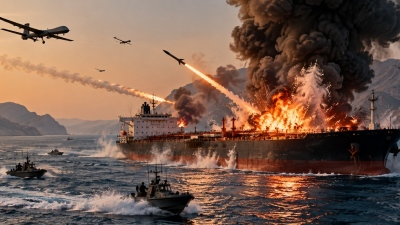
First of all, geopolitical tensions remain elevated, navigation through the Strait of Hormuz continues to face constraints and uncertainty, while recent attacks by the Houthis on key maritime transport bottlenecks and on a pipeline in Saudi Arabia may further restrict supplies of crude oil and natural gas.
Oil prices have already soared back above $100 per barrel, and the longer energy prices stay elevated, the stronger the stagflationary pressures dampening growth will become.
Furthermore, the recent extension of the Sino-American truce may not prove durable if China, alongside its de facto allies Russia, Iran, and North Korea, feels emboldened by geostrategic blunders of the United States.
Tensions surrounding Taiwan could escalate following elections on the island in 2028, while the conflict between Russia and Ukraine is already broadening into a wider theater of operations: Ukraine strikes targets deep within Russia, while Russia conducts hybrid warfare against Europe.
Given that Russia has targeted Russian energy infrastructure, failure to achieve a ceasefire will exert additional upward pressure on hydrocarbon prices.
Concurrently, liberal democracies display mounting signs of political dysfunction, while upcoming elections in the United States, France, Germany, Italy, and Spain could usher in more populist economic policies, which would damage growth and heighten fiscal risks.
Indeed, massive fiscal deficits and high levels of public debt as a share of GDP across many advanced economies, as well as in certain emerging markets, are pushing sovereign bond yields upward.
This threatens to crowd out private-sector output, capital investment, and consumption, while amplifying the risk of credit crises.
The boom in artificial intelligence represents yet another risk factor, and it already shows signs of exuberance.
If it proves to be a «bubble» that must ultimately burst or deflate, the outcome could be negative wealth effects, and by extension lower consumption, credit strains, and a loss of investment appetite by both investors and households.
At the economic policy level, stagflationary shocks that curb growth and drive up inflation tend to create a difficult dilemma for central banks operating under a dual mandate: preserving price stability alongside full employment.
If they judge that fresh interest rate hikes are required to counter inflation, this may undermine growth and intensify concerns over financial stability, given the elevated levels of private and public debt, as well as the risk of debt monetization («money printing»).
The scenarios
Under the baseline scenario, Nouriel Roubini notes, risks remain contained, global economic growth improves in 2027, and inflation subsides as productivity-enhancing technological innovations provide a robust tailwind for the global economy.
In this scenario, elevated bond yields will stem more from the artificial intelligence boom than from worries over inflation or fiscal deficits and debt.
In parallel, a de-escalation of geopolitical tensions is entirely plausible and would result in lower energy prices, establishing conditions so that positive, even double-digit, equity returns of recent years can continue.
Yet, if the most substantial risks materialize, energy and commodity prices may remain elevated or surge further, while trade and supply chains could endure even more severe disruptions.
This would sharply elevate the risk of a severe market correction, accompanied by a simultaneous climb in bond yields and a slide in equity valuations.
The more positive scenario remains the more probable one.
Favorable technological developments remain powerful, market discipline continues to restrain the worst policy choices, and both the United States and China appear to remain committed to de-escalating their rivalry.
Given the scale of potential perils, one must hope that current resilience endures.
Much will hinge on whether political leaders avoid extremes and do not derail one of the most critical technological innovations in the history of humanity, concludes the economist.
www.bankingnews.gr






Σχόλια αναγνωστών